
Love this? Pin it for later!
Batch-Cooking Friendly One-Pot Beef Stew with Winter Squash & Potatoes
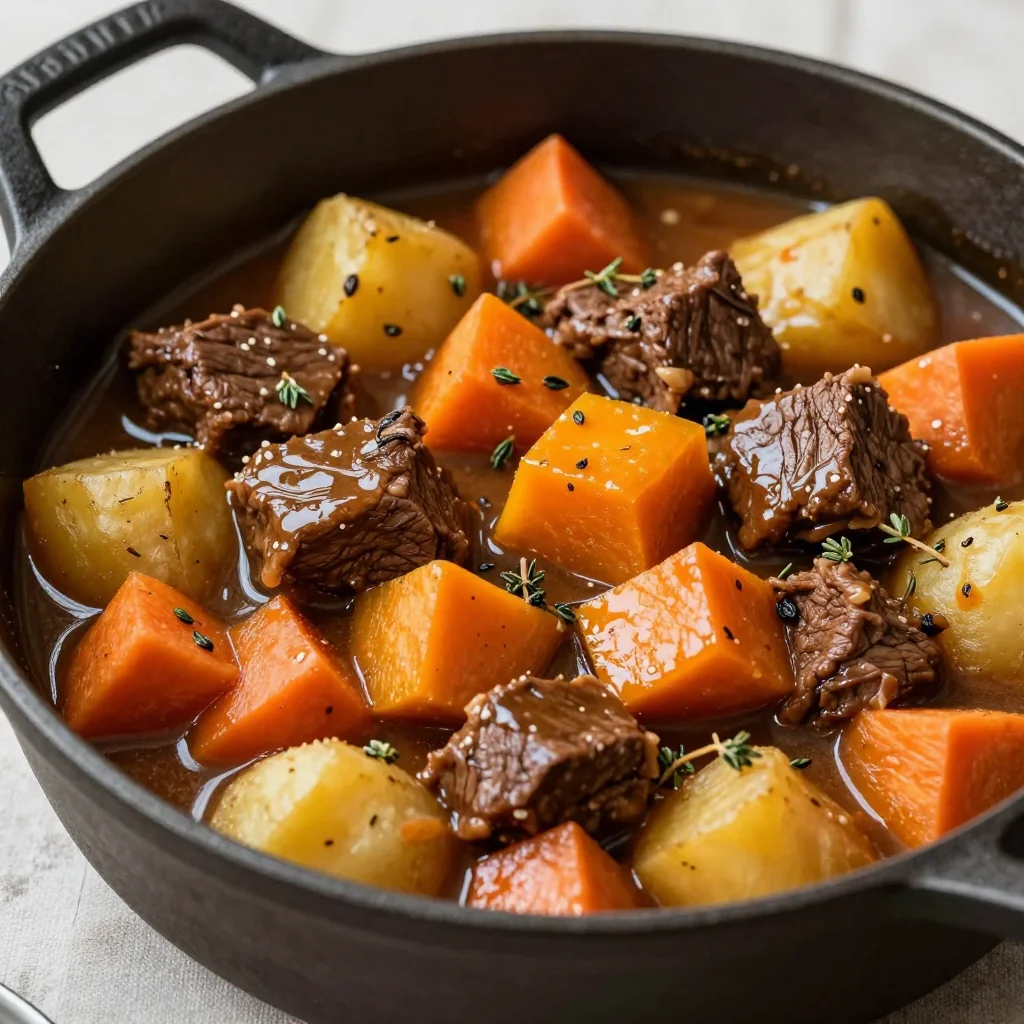
The first time I made this stew, it was a Tuesday in late October when the rain wouldn't stop tapping against my kitchen window. My kids had back-to-back soccer practices, my husband was working late, and the dog—bless his heart—had rolled in something unspeakable during our morning walk. I needed dinner to cook itself while I ferried children, bathed the dog, and answered one last work email. I tossed everything into my enamel-coated Dutch oven, set the burner to the gentlest simmer, and walked back into the house two hours later to the kind of aroma that makes you close your eyes and exhale. The beef had relaxed into spoon-tender morsels, the butternut squash had melted into sweet, golden nuggets, and the potatoes had absorbed every last whisper of thyme and bay. One pot, one ladle, one happy family—plus enough leftovers for two more dinners and a lunch. Since then, this recipe has followed me through new-parent sleep deprivation, holiday houseguests, and every flu season. It scales up effortlessly, freezes like a dream, and tastes even better when you reheat it on a night you swore you had nothing left to give.
Why This Recipe Works
- One-Pot Wonder: Everything from searing to simmering happens in the same heavy pot, meaning fewer dishes and deeper flavor because the browned bits never get lost.
- Batch-Cooking Hero: The recipe easily doubles or triples, and the stew thickens as it cools, making it ideal for portioning into quart containers for the freezer.
- Winter Produce Power: Butternut squash and potatoes are inexpensive, nutrient-dense, and available even when other vegetables look sad in January.
- Flexible Cuts: Chuck roast is budget-friendly, but short ribs or brisket work too—long, slow heat collapses the collagen either way.
- Make-Ahead Magic: Flavor peaks 24–48 hours after cooking, so you can prep on Sunday and serve company-worthy stew on Wednesday night with nothing more than crusty bread.
- Kid-Friendly Veg: The squash dissolves into the broth, adding natural sweetness that balances the tomato and wine, so even picky eaters spoon it up.
Ingredients You'll Need

Great stew starts at the grocery store. Look for chuck roast that’s well-marbled with white flecks running through the deep red muscle; those pockets of intramuscular fat melt into unctuous gelatin that naturally thickens the broth. If you can, buy the roast in one thick slab and cube it yourself—pre-cut “stew meat” often contains irregular pieces that cook unevenly. For the winter squash, butternut is the easiest peel-and-cube candidate, but kabocha or sugar pumpkin bring an extra-creamy texture; just avoid spaghetti squash, which won’t hold its shape. Yukon Gold potatoes are my go-to because their thin skin requires no peeling and their waxy flesh stays pert even after 90 minutes of bubbling. If you only have Russets, cut them larger and add them 15 minutes later to prevent mush.
Stock choices matter. If you keep homemade beef stock in the freezer, congratulations—you’ll be rewarded with a silkier mouthfeel. Otherwise, reach for low-sodium boxed stock so you can control salt as the stew reduces. Tomato paste in a tube is worth the extra dollar; it keeps for months in the fridge and lets you use just the tablespoon you need. For wine, any dry red you’d happily drink works; I keep a box of Cabernet on the counter for cooking because it stays fresh for weeks. Finally, buy whole dried bay leaves rather than crumbly fragments; a single sturdy leaf perfumes the entire pot and removes easily before serving.
How to Make Batch-Cooking Friendly One-Pot Beef Stew with Winter Squash and Potatoes
Pat, Season, and Sear the Beef
Blot 3½ lb (1.6 kg) chuck roast cubes with paper towels—moisture is the enemy of browning. Toss them in a large bowl with 2 tsp kosher salt, 1 tsp freshly ground black pepper, and 2 tsp sweet paprika. Heat 2 Tbsp canola oil in a heavy 5–6 quart Dutch oven over medium-high until the oil shimmers and a droplet of water dances across the surface. Working in three batches (crowding steams rather than sears), brown the beef 2–3 minutes per side until a chestnut crust forms. Transfer to a rimmed plate. Deglaze each batch with a splash of the wine if the bottom threatens to scorch.
Build the Aromatic Base
Lower heat to medium and add 1 Tbsp butter to the rendered fat. When it foams, stir in 2 cups diced onion (about 1 large), 1 cup diced celery, and 1 cup diced carrot. Scrape the brown bits with a wooden spoon; those caramelized proteins equal free flavor. Cook 6–7 minutes until the vegetables soften and the onion turns translucent. Add 4 minced garlic cloves and cook 45 seconds—just until fragrant. Clear a hot spot in the center and bloom 2 Tbsp tomato paste for 1 minute, stirring constantly so the natural sugars don’t burn.
Deglaze and Reduce
Pour in 1 cup dry red wine plus 1 Tbsp Worcestershire sauce. Increase heat to high and boil 3 minutes, reducing the liquid by half. This concentrates the fruitiness of the wine and cooks off harsh alcohol, leaving behind complex acidity that brightens the long braise. The bottom of the pot should now look satiny rather than sticky.
Add Stock, Herbs, and the Beef Back
Return the seared beef and any accumulated juices to the pot. Add 4 cups low-sodium beef stock, 2 cups water, 2 bay leaves, 4 sprigs fresh thyme (or 1 tsp dried), and 1 tsp dried rosemary crushed between your palms to release oils. The liquid should barely cover the solids; add a splash more water if needed. Bring just to a simmer—do not let it boil vigorously or the meat fibers will seize and toughen.
Low and Slow First Act
Cover the pot with a tight-fitting lid and reduce heat to the lowest gentle simmer your stove allows. (If yours runs hot, slip a heat-diffuser plate underneath.) Cook 45 minutes, then stir once, checking that liquid still kisses the top layer of beef. This first phase begins collagen breakdown while the herbs infuse.
Add the Winter Vegetables
Uncover and scatter in 3 cups ¾-inch butternut squash cubes, 2 cups Yukon Gold potato halves, and 1 cup sliced parsnip (optional but lovely for earthy sweetness). The squash will break down slightly and naturally thicken the gravy, while the potatoes should stay intact. Press everything down so it’s submerged; add up to 1 cup additional stock only if the stew looks dry. Re-cover and simmer 35–40 minutes more, stirring once halfway.
Final Simmer & Texture Check
Uncover, increase heat slightly, and simmer 10 minutes to concentrate flavors. Fish out bay leaves and thyme stems. Test a cube of beef by pressing it against the side of the pot; it should yield easily. If it resists, cover and cook 10 minutes more, repeating as needed. Taste broth and adjust salt—stews often need a final lift, so season boldly.
Rest for 15 Minutes
Off heat, let the stew rest uncovered. This brief pause allows the bubbling to subside so the flavorful fat rises and can be skimmed if you like, plus the temperature drops to the perfect spoonable warmth. Garnish with chopped parsley or celery leaves for a fresh pop.
Expert Tips
Control the Simmer
If your burner’s lowest setting still bubbles too vigorously, set the lid slightly ajar or slide a heat-proof ceramic plate between pot and burner. Gentle heat equals tender beef.
Freeze Flat
Ladle cooled stew into labeled gallon zip-top bags, press out air, and freeze flat on a sheet pan. Once solid, stack like books—saves 40% freezer space.
Thicken Naturally
Mash a cup of the squash against the pot side and stir back in for a velvety body without flour or cornstarch—gluten-free and silky.
Speed It Up
Cut beef into ½-inch pieces and pressure-cook on high for 25 minutes with all ingredients except potatoes; add them after quick-release and simmer 12 minutes.
Color Boost
Add ½ cup frozen peas or chopped spinach during the final 2 minutes for a pop of green that photographs beautifully and lightens the richness.
Safety First
Cool hot stew quickly by placing the uncovered pot in a sink filled with 2 inches of ice water; stir every 5 minutes until lukewarm before refrigerating.
Variations to Try
- Primal Swap: Replace half the beef with boneless, skinless chicken thighs; reduce first simmer to 20 minutes and proceed as directed.
- Smoky Heat: Add 1 chipotle pepper in adobo, minced, with the tomato paste and swap sweet paprika for smoked paprika.
- Mushroom Umami: Stir in 8 oz cremini mushrooms, quartered, when you add the potatoes; they mimic meaty texture for vegetarians when beef is omitted.
- Moroccan Flair: Swap rosemary and thyme for 1 tsp each ground cumin and coriander, add ½ tsp cinnamon, and finish with chopped preserved lemon and cilantro.
- Low-Carb Option: Substitute potatoes with 2 cups cauliflower florets and 1 cup turnip cubes; simmer only 12 minutes after adding to prevent mush.
- Creamy Stroganoff Twist: Stir ½ cup sour cream mixed with 1 tsp flour into the finished stew off-heat and serve over egg noodles instead of bread.
Storage Tips
Cool completely, then refrigerate in airtight containers up to 4 days. For longer storage, freeze in labeled quart bags or Souper-cubes for up to 3 months. Thaw overnight in the refrigerator or submerge sealed bag in cold water for 2 hours. Reheat gently over medium-low, adding a splash of stock to loosen; avoid rapid boiling, which toughens beef. If stew separates on thawing, whisk a tablespoon of warm broth into 1 tsp cornstarch and stir back in while reheating for a unified gravy.
Frequently Asked Questions
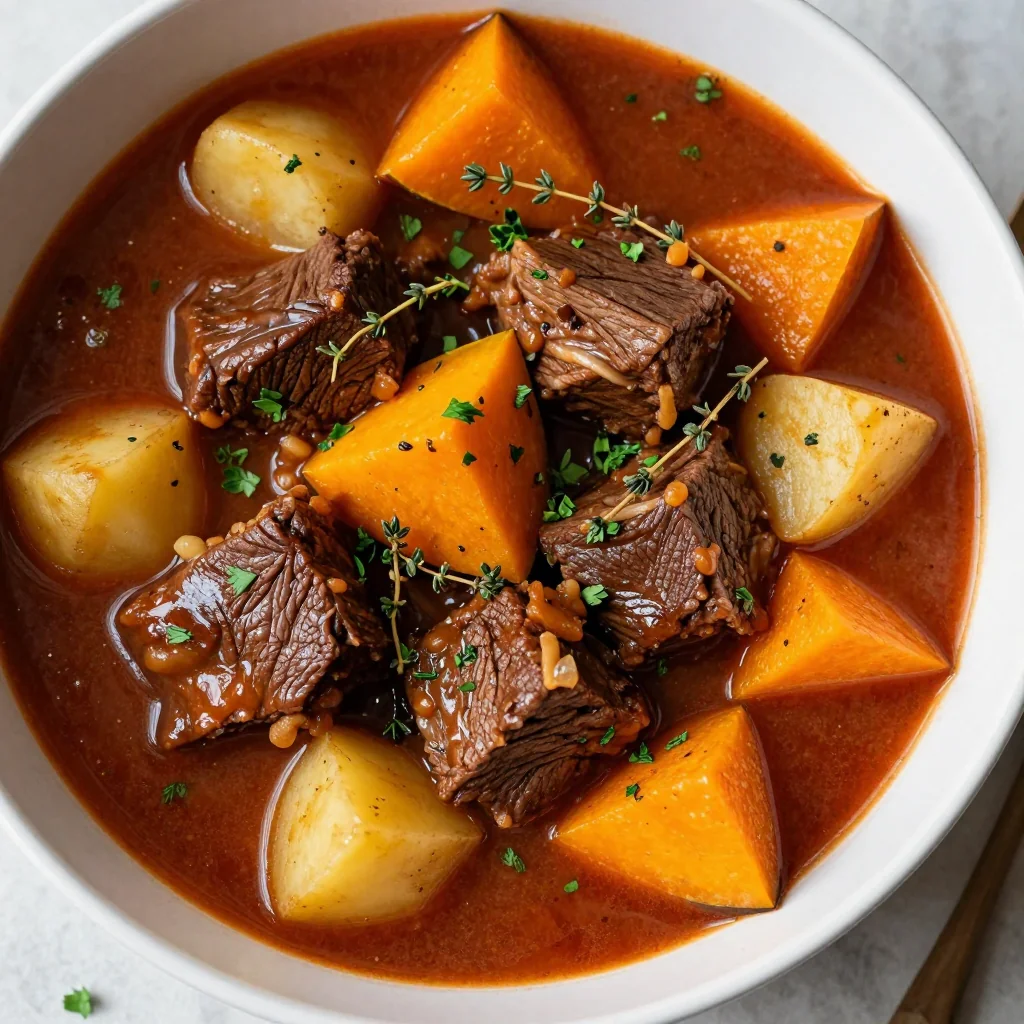
Batch-Cooking Friendly One-Pot Beef Stew with Winter Squash & Potatoes
Ingredients
Instructions
- Season & Sear: Pat beef dry, toss with salt, pepper, and paprika. Heat oil in Dutch oven over medium-high. Brown beef in 3 batches, 2–3 min per side. Set aside.
- Sauté Aromatics: Melt butter in pot. Add onion, celery, carrot; cook 6–7 min. Stir in garlic 45 sec, then tomato paste 1 min.
- Deglaze: Add wine and Worcestershire; boil 3 min, reducing by half.
- Simmer: Return beef, add stock, water, herbs. Bring to gentle simmer, cover, cook 45 min.
- Add Veggies: Stir in squash, potatoes, and parsnip if using. Cover, simmer 35–40 min until beef and potatoes are tender.
- Finish: Uncover, simmer 10 min to thicken. Remove bay/thyme, adjust salt, rest 15 min before serving.
Recipe Notes
Stew thickens on cooling; add broth when reheating. Flavor peaks 24–48 h ahead—perfect for meal prep.


